
Personally I blame Webster
For dumbing down perfectly good spelling.

I once wrote a post on the subject of date formats and US spelling. I noted how Americans use the wholly illogical mm/dd/yyyy format, while the rest of the world generally (and most sensibly) use dd/mm/yyyy - placing the date in ascending order of magnitude. This leads to the most amusing mix-ups, where a Brit might describe their tenth of April birthday as 10/04/1980, and wonder why an American friend sends them a card on the 4th of October. Of course, this is mildly inconvenient when it comes to birthdays, but potentially catastrophic for, say, an important business meeting. Imagine the hilarity that can ensue when you miss a meeting because you thought it was in six months’ time...
But back to this week’s rant. The whole date thing has prompted me to revisit the topic of American spelling.
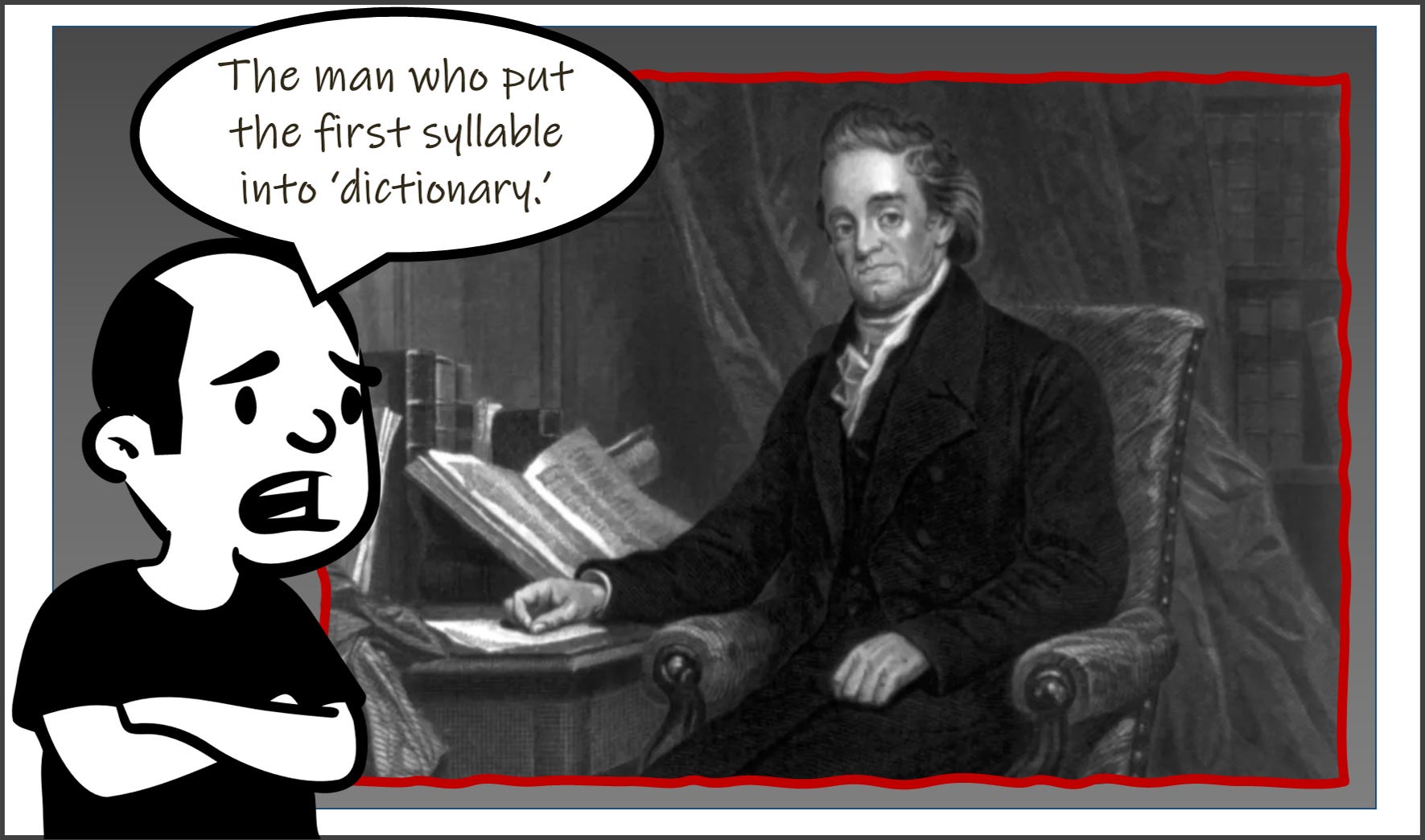
I blame Webster. Noah Webster, to be specific. The man who took the English language, decided it was too complicated for Americans to handle, and systematically dumbed it down in his 1828 dictionary. He removed letters, simplified spellings, and generally mucked about with perfectly good words under the guise of ‘reform’ and ‘simplification’.
Let’s start with the obvious ones. ‘Colour’ became ‘color’. ‘Favour’ became ‘favor’. ‘Honour’ became ‘honor’. Webster decided that the ‘u’ was unnecessary and promptly binned it. Never mind that the word came from French and Latin roots where the ‘u’ was integral to the spelling. Never mind that removing it made the words look incomplete, as if someone had started writing them and then got bored halfway through. No, the ‘u’ had to go because... well, because Webster said so.
Then there’s ‘programme’, which became ‘program’. The French spelling with its elegant double-m and final ‘e’ was apparently too fancy for American tastes, so they stripped it back to something that looks like it should refer to computer code rather than a theatrical performance. Although, to be fair, even the British have largely adopted ‘program’ for computing purposes while keeping ‘programme’ for everything else, which is confusing for everyone.
The ‘-ise’ versus ‘-ize’ debate is another Webster special. ‘Realise’ became ‘realize’, ‘recognise’ became ‘recognize’, ‘organise’ became ‘organize’. The British spelling with ‘s’ is actually closer to the French origin, but Webster preferred the Greek-influenced ‘z’, and Americans dutifully followed. The result is that British English now looks softer and more European, while American English looks harder and more... well, American.
‘Centre’ became ‘center’, ‘theatre’ became ‘theater’, ‘metre’ became ‘meter’. Again, the French influence was stripped away in favour of phonetic simplicity. Never mind that ‘meter’ already existed as a different word (a measuring device), creating potential confusion. Webster wanted spelling to match pronunciation, and damn the consequences.
‘Defence’ became ‘defense’, ‘offence’ became ‘offense’, ‘licence’ became ‘license’ (in all cases, not just as a verb). The pattern continues - remove the ‘c’, replace it with ‘s’, pretend this makes things clearer rather than just different.
Then there are the really egregious examples. ‘Cheque’ became ‘check’, despite ‘check’ already having multiple meanings in English. ‘Tyre’ became ‘tire’, even though ‘tire’ means to become weary, creating yet another word with multiple meanings. ‘Aluminium’ became ‘aluminum’, losing an entire syllable in the process and making the element sound like something you’d find in a hardware store rather than a chemistry lab.
‘Grey’ became ‘gray’, because apparently the British spelling was too... grey? ‘Plough’ became ‘plow’, losing its delightfully odd Middle English spelling in favour of phonetic blandness. ‘Moustache’ became ‘mustache’, because Americans couldn’t be bothered with that fancy French ‘ou’ combination.
But perhaps the most teeth-grinding Americanism of all is ‘zee’. Not a spelling, I grant you, but the pronunciation of the letter ‘z’. It’s ‘zed’, for crying out loud. It’s always been ‘zed’. The letter comes from the Greek ‘zeta’, which is pronounced with a ‘d’ sound at the end, not an ‘ee’. But Americans decided that ‘zee’ rhymed better with ‘bee’ and ‘cee’, and now we have generations of children singing ‘Now I know my ABCs’ instead of the clearly superior British version where it doesn’t rhyme at all and sounds charmingly awkward.
What really gets my goat is that Americans now think the English can’t spell. They look at our ‘extra’ letters and ‘unnecessary’ vowels and assume we’re the ones who’ve got it wrong. The arrogance of it! We invented the bloody language! We were spelling these words correctly long before America had even figured out how to be a country!
But here’s the truly horrifying part: these American spellings are creeping into British English. Microsoft Word, with its American default settings, autocorrects British spellings to American ones unless you specifically change the language settings. Google’s algorithm doesn’t distinguish between ‘organise’ and ‘organize’ - it treats them as interchangeable. Young people, raised on American TV shows and social media, are starting to use American spellings without even realizing they’re doing it (see what I did there?).
I see ‘color’ in British publications. I see ‘zee’ in British schools. I hear British children singing alphabet songs with American pronunciation. It’s linguistic colonialism, and we’re letting it happen through sheer apathy and the dominance of American technology companies.
Every time I see a British person write ‘color’ or ‘center’, a little part of me dies inside. Every time I hear someone say ‘zee’ instead of ‘zed’, I want to stage an intervention. This is our language! We should be protecting it, not surrendering it to Webster’s 200-year-old dumbing-down project!
So yes, I blame Webster. He started this mess. But I also blame us for not standing up for proper English spelling. For letting American influence wash over our language like a transatlantic tide, eroding our linguistic heritage one missing ‘u’ at a time.
It’s ‘colour’, damn it. With a ‘u’. And it always will be.
At least in my writing.
Even if Word keeps underlining it in red.
Thanks for reading 5 Minute Break! Subscribe for free to receive new posts and support my work.
Jonathan is a publisher at Winter & Drew Publishing.
Are you looking to self-publish your book - excited by the high royalties as well as being able to keep your rights and creative control? But… you’re not sure how the process works? Mistakes can be costly and add delays. This is where we can help. Winter & Drew will support you through the process - making it potentially faster and cheaper. Plus you get the credibility of having a publisher for your book.
Check our submission process at Winter & Drew Publishing.

English spelling is so far removed from pronunciation that making some tweaks here and there, as Webster did, was hardly worth it. At least ‘colour’ hints at the fact that the second vowel sound is different from the first. ‘Color’ is no help!