
'Influencers.' When did advertising become so depressingly aspirational?
Now everyone is trying to monetise their 15 minutes of fame.
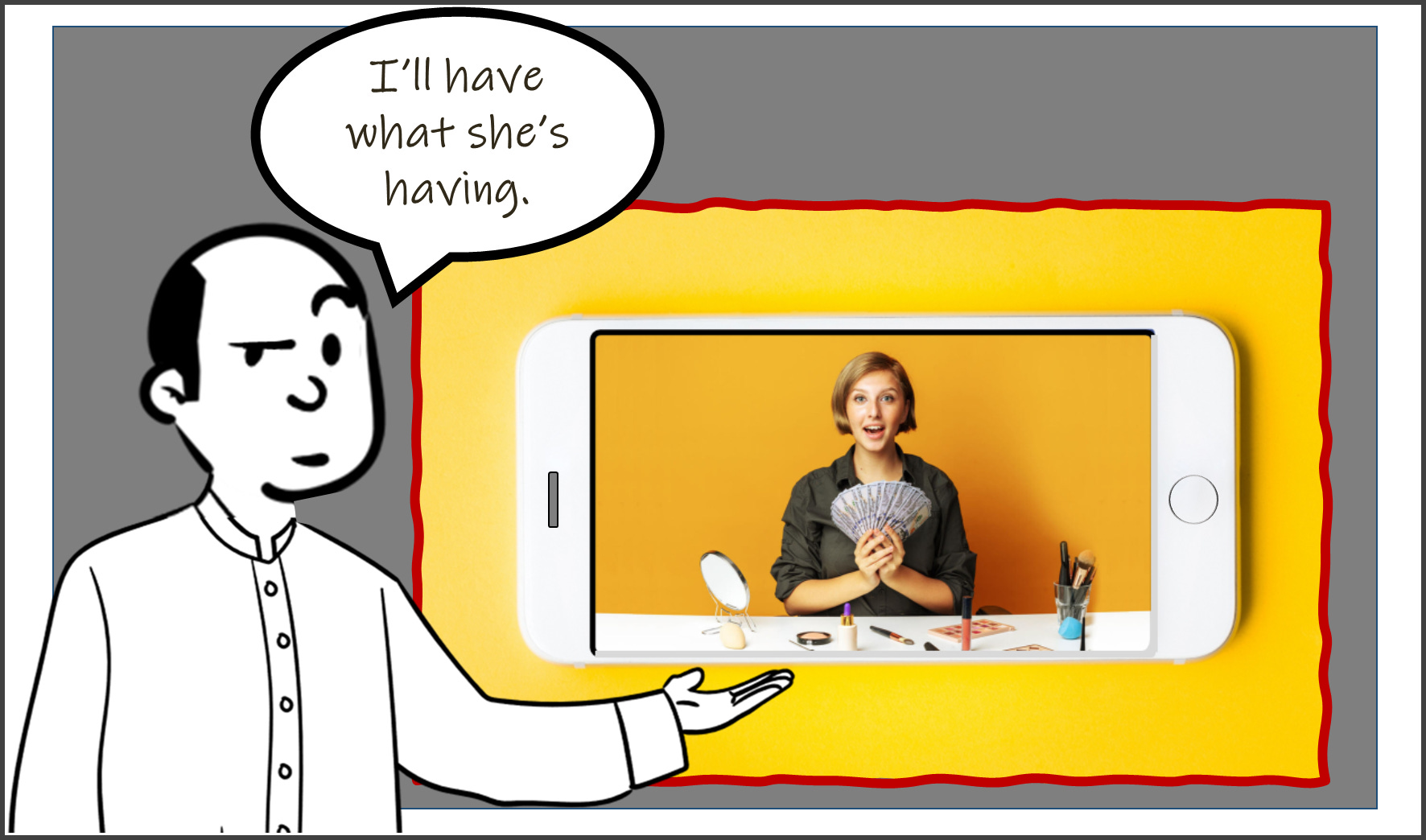
Last week I talked about how people are presenting their ‘perfect lives’ on Instagram.
This week, I want to ‘deep dive’ into one aspect of this; ‘influencers’ – a type of person on social media who makes money by... well, by being on social media. Which is a polite way of saying ‘people who advertise products while pretending not to advertise products’.
Influencers represent everything that’s wrong with modern consumer culture wrapped up in a selfie-taking, perfectly lit, sponsored-content-creating package. And somehow, we’ve decided this is not only acceptable but aspirational.
Let me explain how this works, for those of you lucky enough to be unfamiliar with the concept.
An influencer builds up a following on social media by posting content – photos, videos, thoughts, whatever. Once they have enough followers, companies start paying them to promote products. The influencer then incorporates these products into their content, making it look like they genuinely use and love these items as part of their everyday life, while in reality they’re being paid thousands of pounds to hold a particular brand while looking contemplative.
It’s advertising. Pure and simple. Except it’s advertising that’s disguised as authentic content from someone you’ve chosen to follow.
The genius – and I use that term very loosely – Is that influencers have figured out how to make advertising look like friendship. They speak directly to camera in a casual, conversational way. They share details of their ‘real’ lives. They create a parasocial relationship where their followers feel like they know them personally. Then they leverage that artificial intimacy to sell you stuff.
“Hey guys, just wanted to share this amazing new skincare product I’ve been using!” they say, as if they’re telling a friend about something they discovered, rather than reading from a script provided by the company that’s paying them £5,000 for the post.
The truly insidious part is that many influencers don’t even disclose that they’re being paid. Or if they do, it’s buried in hashtags at the bottom of the post – #ad #sponsored #partner – the bit that no-one ever reads. The regulatory bodies are supposed to police this, but enforcement can be patchy at best, and some influencers seem to have become very good at skirting the rules.
Even when they do disclose, the damage is already done. Their followers have seen them using and endorsing the product. The influencer’s image and reputation have been lent to the brand. The advertisement has been made, regardless of whether there’s a obscure hashtag acknowledging it.
But what really gets me is that being an influencer is now considered a legitimate career aspiration. Young people look at these individuals, living apparently glamorous lives while getting paid to take photos of themselves, and think I want to do that, too.
They don’t seem to realise that what they’re aspiring to is being a walking, talking advertisement. They want to turn themselves into billboards for whatever company will pay them. They want to commodify their lives, their relationships, their experiences, all in service of selling products to strangers.
And they call this ‘living their best life’ or ‘building their brand,’ as if turning yourself into a commercial product is somehow empowering rather than deeply depressing.
The influencer economy has created a situation where people – mostly young women, but increasingly young men too – spend their entire lives performing for an audience. Every meal is a photo opportunity. Every outfit is ‘content’. Every relationship is material for posts. They’re not living their lives, they’re creating advertisements for their lives, hoping that enough people will watch and companies will pay them to advertise actual products too.
And I’m sure the industry is growing. Companies have figured out that influencer marketing is incredibly effective, particularly for reaching young consumers who’ve learned to tune out traditional advertising. So they pour money into it, creating more opportunities for influencers, which creates more people aspiring to be influencers, which means more people turning themselves into advertisements.
It’s a self-perpetuating cycle of commodification, where authentic human experience is gradually being replaced by curated content designed to sell products.
And we’re complicit in this. Every time we follow an influencer, every time we engage with their content, every time we buy something because we saw them using it, we’re feeding the machine. We’re validating the idea that it’s acceptable to turn yourself into an advertisement, that authentic human connection can be replaced by sponsored content, and that the highest aspiration for a young person is to become a successful billboard.
I find the whole thing utterly depressing. We’ve created a generation that measures success by follower counts and engagement rates. That sees relationships as content opportunities. That understands life as a series of marketable moments rather than as genuine experiences to be lived and enjoyed.
When I was young, we had advertisements on television, in magazines, on posters. They were clearly labelled as advertisements. You knew what you were looking at. You could choose to engage with them or ignore them. They didn’t pretend to be your friends.
Now advertisements have evolved. They’ve learned to mimic human connection, to disguise themselves as authentic content, to infiltrate every aspect of our lives. And we’ve not only accepted this, we’ve made it aspirational. We’ve told young people that the goal is to become the advertisement.
If that’s not a sign that consumer capitalism has won, I don’t know what is.
Jonathan is a publisher at Winter & Drew Publishing.
Are you looking to self-publish your book - excited by the high royalties as well as being able to keep your rights and creative control? But… you’re not sure how the process works? Mistakes can be costly and add delays. This is where we can help. Winter & Drew will support you through the process - making it potentially faster and cheaper. Plus you get the credibility of having a publisher for your book.
Check our submission process at Winter & Drew Publishing.

Totally agree, but the commodification of lives is not without its problems as some influencers have discovered to their cost. For some, the mental and emotional toll is heavy after a while, and you read about influencers suffering from depression, and worse. It's not surprising, it must be awful living in a fake world where they probably can't differentiate between real and fake after a while.